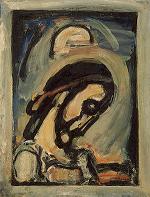
 Here it is, folks—the final post in our “essential lists” series. This final post is by Stephen Cox, a theology graduate who is currently studying philosophy at Sydney University. Stephen is also a practicing architect with Szwaj+Cox Architects, so he’s the perfect person to contribute a list of “essential buildings.”
Another Aussie friend, Rory Shiner, will be posting a much fuller version of this list of buildings in a number of instalments. So for more details, check out his blog, Frankly, Mr Shankly. Anyway, here’s what Stephen has to say about buildings:
Just as one doesn’t need to have written, or even read, a systematic theology in order to have and to live by a theology, so every building has an idea, a raison d’être, and thus responds to Christianity in some way. Granted, there might be disagreement about the extent and importance of this response—but it is something that is at least worth noticing. An obvious but crucial point is that buildings are built by people, meaning that they reflect who we are (or were). Therefore as we look at any building—for example, at its style, layout, or budget—we can learn something about those who built it.
This list is an attempt to provide some insights into what is worth noticing about the built world around us, and why our buildings reflect who we are, and to what we aspire.
1. The Parthenon Athens, Greece. (built: 447-438BCE, architects: Iktinos and Kallikrates) Note: Beauty, Ancient Wisdom.
2. The Temple Mount, Jerusalem, Israel. (built: [temple] c.950BCE—destroyed 586BCE, 526BCE—destroyed 70CE [Dome of the Rock] 690CE) Note: Politics, Eschatology
3. The Pantheon, Rome, Italy (built: 25-27BCE destroyed 80CE, rebuilt c.125CE) Note: Beauty, Ancient Wisdom, Precedent
4. The Basilica of St Peter, Rome Italy (built: 1505-1615 architects: Giuliano da Sangallo, Donato Bramante, Raphael Sanzio, Antonio da Sangallo the younger, Michelangelo Buonarroti, etc) Note: Beauty, Politics, Precedent
5. Chartres Cathedral, Chartres, France (built: 1145-1220) Note: Beauty, Statement
6. Fallingwater, Bear Run, PA, USA (built: 1935-1937 architect: Frank Lloyd Wright) Note: Precedent
7. Basilica Santa Maria del Fiore , Florence, Italy (built: 1296-1436 architect Arnolfo di Cambio dome: 1429-1436 architect: Filippo Brunelleschi) Note: Technological Prowess, Beauty.
8. Villa Capra , (La Rotunda) Vincenza ,Italy (built: 1566-1580 architect: Andrea Palladio) Note: Beauty, Statement, Precendent.
9. Tempieto San Pietro , (built: 1508- architect: Donato Bramante) Note: Beauty, Statement.
10. Chrysler Building, New York City, NY, USA (built 1928-1930 architect: William van Alen) Note: Precedent, Technological Prowess.
11. Sydney Opera House, Sydney, Australia (built: 1957-1973 architect: Jørn Utzon) Note: Beauty, Politics.
12. Pruitt-Igoe Housing Project, St Louis, Mi, USA (built:1951- architect: Minoru Yamasaki) Note: Statement, Modernism.
13. Zeppelintribune, Nuremburg, Germany (built: architect Albert Speer) Note: Statement, Politics.
14. The Alhambra, Granada, Spain (built: 1248-1354) Note: Beauty, Statement.
15. Casa Milà, Barcelona, Spain (built: 1905-1970 architect: Antonio Gaudi) Note: Beauty.
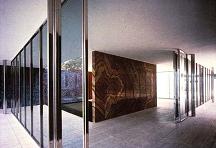
16. Barcelona Pavilion, Barcelona, Spain (built: 1929 architect: Mies van de Rohe) Note: Statement.
17. Wainwright Building , St Louis, MI, USA (built: 1891 architect: Dankmar Adler and Louis Sullivan) Note: Statement, Precedent.
18. Guggenheim Museum, Bilbao, Spain (built: 1997 architect: Frank Gehry) Note: Statement, Community Focus.
19. Taj Mahal, India (built 1631-1653) Note: Beauty, Statement.
20. Your House, Note: Statement. The type, style and form of your own residence, whether you own it or rent or whether you even have a house, is a product of the culture in which you live and also of your own personal decisions and circumstances. Have you thought about the house you live in? Why have you decided to live where you live? How important is housing in your life? How do you live in your house? What does your house say about you?

 Here it is, folks—the final post in our “essential lists” series. This final post is by Stephen Cox, a theology graduate who is currently studying philosophy at
  Back in 1988,
  ). As I read this book, the whole word suddenly appeared in a new light. Everything looked different—to quote
 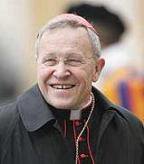 Last week an international colloquium of 140 senior church leaders and theologians from the Roman Catholic, Anglican, Orthodox and Methodist churches met for six days at
 Here is a sequel from
  I asked
  First
First 
 The new issue of the
  I have just added a new poll to the sidebar. I must confess that I myself am a bit of a bookworm; and, what is worse, I love not only reading books, but also possessing them and placing them neatly on shelves. So how about you? How many books do you own? Let us know in the new poll.
 “The history of Christianity is frequently sordid and depressing, and very frequently, apparently sacred events turn out to have very secular causes. Christians will remain beginners in their faith if they do not face up to this. The miracle of the church's story is that after all its mistakes, bewildering transformations and entanglements in human bitterness, it is still there.” —Diarmaid MacCulloch
 “The music that really turns me on is either running toward God or away from God. Both recognize the pivot, that God is at the centre of the jaunt.” —Bono
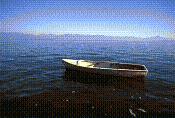 Karl Barth, Rudolf Bultmann and Paul Tillich are taking a break together, fishing on Lake Geneva. They are having a lovely time, smoking their pipes and chatting idly. It’s hot and they are getting thirsty. So Barth stands up, steps out of the boat, and walks across the water to the shore, where he gets some beers and then returns to the boat. But the drinks don’t last long. So Barth says to Tillich: “Your turn, Paul.” Tillich gets up, steps out of the boat, walks across the water, and fetches some more beers. It is really hot now, and the drinks are soon finished. Bultmann is beginning to sweat profusely, so finally Barth tells him: “Come on, Rudolf, it’s your turn now.” With a slight tremor in his knees, Bultmann gets up, steps out of the boat—and sinks like a stone. Fortunately he manages to swim to the surface; he drags himself back into the boat and sulks at the far end. Tillich turns to Barth and says: “Do you think we should have told him where the stepping stones are?” Barth looks at him in astonishment and replies: “What stones?”
 Chris Tilling’s delightful