Showing posts with label art. Show all posts

Friday, 11 November 2011

The icon of the Holy Cross: 15 glances


1.

The icon portrays revelation: the crucifixion of the human Jesus as the appearance of the eternal God. The divine being is eternally cruciform, even as it is eternally radiant.

2.
The crucifixion of Christ is the secret of eternity, the true and only glory that shines forever from the abyss of nothingness.

3.
At the centre of Christian devotion is not a revealed doctrine, a religious ideal, or even a right way of life, but an embodied human person. Christianity began not with beliefs about Jesus, but with people who had known Jesus. They were affected by Jesus as we are affected by a powerful friendship, not as we are affected by reading a powerful book or encountering a new idea. "That which was from the beginning, which we have heard, which we have seen with our eyes, which we have looked upon, and our hands have handled…" (1 John 1:1). The heartbeat of Christian faith is embodied encounter.

4.
The crucifixion is depicted here as realistically as is possible within the bounds of iconographic form. The human Jesus stretches out his arms across a rough-hewn wooden beam. His body is bent, his feet twisted, his hands pierced, his head turned down in sorrow.

5. 
Around this earthly historical cross shines an eternal heavenly cross. This budded cross is clean and perfect and unbloodied; its form is untouched by the harsh lines and distorted perspectives of the small internal cross. Its form is light itself, the light of eternity. Everything contingent, historical, earthly is suspended amid this timeless light, absorbed into the serene balance of perfect form. The budded cross is the true essential form, the Platonic reality, that projects the earthly crucifixion like a black shadow on to the wall of the cave of time.

6. 
The eternal cross is a theodicy. Death and hell are safely circumscribed within its shining frame.

7.
At the top of the icon, the glorious divine face of Christ peers through the curtains, high above the earthly historical cross of Jesus. Unlike the face of the crucified one, this Christ-face looks straight ahead, reminding us that its own impassive glory is the ultimate truth of the crucifixion. On either side, the saints gather reassuringly, springing like flowers from the barren wood of the cross. The saints model for us our own proper response to the spectacle of the crucified one. We are to respond with adoring humility and reverent submission. The presence of the saints makes the cross safe, familiar, and accessible. There is, the icon assures us, a proper human posture that corresponds to the event of the cross. The cross stands not merely over and against us but alongside us, in uninterrupted continuity with our religious piety.

8. 
Is not history – the history of Jesus – completely fixed and immobilised in this representation? Is it not suspended in eternity like a beautiful figure inside a glass ball?

9. 
Are we not left with the impression that the icon is wholly right in what it shows, yet somehow also wholly wrong? Its sole aim is to set forth Christ as the truth of eternity, the truth that shines forever, the truth of God. But by the very act of showing this, the icon allows the impassive majesty of eternal truth to eclipse the brute fact of the cross of history. 

10.
When I was a little boy, I lived in a vast sprawling mansion beside the sea on a tropical island in North Queensland. When I was grown up, I went back one day to the island and saw my childhood home: a little dilapidated fibro beach shack with a tin roof and cracked concrete floors, scarcely bigger than a backyard shed. All my life, the real earthly house had been eclipsed by the fantasy house which my memory had built for me as, year after year, I silently venerated my childhood. The fantasy house was beautiful: but it was fantasy.

11.
As though we cannot venerate Christ without immediately turning him into an idol, an eternal idea instead of an embodied person. As though religious piety produces an immediate and inevitable transformation of the cross into a smooth, perfectly balanced object, something easily grasped and held in the hand, an instrument not of judgment but of consolation.

12. 
Theological truth and spiritual fantasy are thus bound together in the icon, as closely related as wheat and tares or light and day. 


13.
You can see why Karl Barth so loved Grünewald's great and terrible painting of the crucifixion. In Grünewald, one finds a complete repudiation of Christian Platonism: a theology of the cross stripped bare of all theology of glory. Yet Grünewald's Protestant aesthetic has its own perils. Without something like a Platonic anchoring, are we not right on the brink of a steep descent into theological nihilism? In beholding the earthly historical cross devoid of all religious mediation, do we not find ourselves at the very doorstep of hell?

14. 
Or is that, perhaps, where we are meant to find ourselves when we behold the cross?

15. 
The truth of the icon – a truth that Grünewald all but obliterates – is that there is, for us, no means of access to Christ accept through religious veneration. Our only contact with Christ is through worship in the company of the living tradition of the saints – even if our worship immediately becomes indistinguishable from idolatry. We cannot have Christ without religion: that is the truth that the icon teaches. But – this is what the icon forgets – we can speak of "true religion" only as we speak of a "justified sinner" (Karl Barth).

Tuesday, 25 October 2011

The Virgin of Vladimir: seven glances

1. 

Behold the handmaid of the Lord! 

2. 
There are paintings you can look at for a time, until at last you have finished with them. The Virgin of Vladimir is not that kind of picture. You could look at it all your life, and you'd still only be getting started – or rather, you'd be getting even further away from sounding out its mystery. To look at an icon is to "fast with your eyes" (St Dorotheus). 

3.
Though the face of the Virgin at first absorbs all our attention, the small insistent face of the child is, in fact, older and wiser and more – how else to put it? – more eternal. This small face constitutes the real centre of the icon and the real source of its radiance. Reflecting his light, the Virgin shimmers. Her infinitely sad, infinitely strong face is pulled towards the commanding gravity of this centre.

Yet observe the child's face, turned upwards and pressed so eagerly against the face of the mother. Look at his expression. Is it not something strangely close to – worship? Indeed, if I met someone who did not know what it meant to worship, I could hardly do better than to point to this picture, to this child's face, and to say: "It looks like that."

On the one hand, there is a real religious danger here: the danger of allowing Christ's mother to become an independent centre of religious devotion. But on the other hand, there is something profoundly true and correct in the representation of this child's "worship" of his mother. For no other word comes close to evoking the extent of Christ's devotion to humanity. To speak of Christ's "love" is too hackneyed and half-hearted. When we talk of love, we tend to think of delirious teenagers locked in the obsessiveness of romance, or of a man seducing a woman into his bed, or maybe of an old married couple, contented and at peace. But we would perhaps be closer to the truth if we imagined Christ's devotion to humanity as analogous to the piercing clarity and conviction with which the fundamentalist offers his life to god before going out into the busy street and detonating himself.

I do not mean that Christ is devoted to God in this way, but to us. His single-minded preoccupation with humanity is a kind of madness, a lucid intoxication. To unworthy humanity he ascribes all imaginable worth. As though he valued us – literally, worshipped us – above all other things, even his own life, even the life of God. 

4.
The disturbing political and ideological role of the Virgin of Vladimir in Russian history is completely bound up with what is so pure and so instructive in it: namely, its veneration of the bond between this Child and his Mother. Look at the mother's invincibly tender clasping of her son, and you will understand the Russian people's invincible conviction of an absolute and unbreakable bond to the sacred motherland. For the Vladimir icon is a representation not only of Christ and the Theotokos but also of a transcendent bond between the Russian people and their Mother Russia. 

It is this that makes it possible to comprehend the otherwise quite bewildering way that "Russia" routinely appears in Orthodox theological writing not only as a legitimate contextual issue but as a proper doctrinal topic in its own right. The iconographer was, of course, reflecting this preexisting habit of mind, this tendency to elevate Russian belonging to a transcendent status; but it must still be said that the Vladimir icon – the most venerated image in all of Russia – has burned that conviction on to the Russian imagination for nearly a thousand years. You need only look at the icon to understand why nationalistic sentiment is so closely bound up with the hidden core of Russian religious life; why the history of modern Russian thought is essentially the story of the Slavophiles; and why, for a non-Slavic person, a complete and thoroughgoing conversion to the Russian Orthodox Church proves all but impossible.

5.
The theological intuition underlying the whole tradition of Russian iconography is that there are, really and essentially, only two human faces: the face of Christ, and the face of his Mother. All other human persons have their own peculiar distinctiveness, their own particular faces, to the extent that they participate in these forms. For the Orthodox, it is not Adam and Eve who are the prototypes of humanity, but the New Adam and the New Eve – so that the fundamental human relationship is not that of man and woman (Karl Barth) or husband and wife (John Paul II), but of mother and child. The single form of Virgin and Child is the prototype of every human form: "The divine image in humankind is disclosed and realised … as the image of two: of Christ and of his Mother" (Sergius Bulgakov). 

6.
The truth of this came home to me as I was writing these quiet reflections the other night. My wife and children were away for the weekend, so I had gone out alone to a jazz bar, to hear some music and try a bit of writing. It was approaching midnight, and I was drinking my beer and scratching away with my fountain pen in a crumpled notebook, with a postcard-sized copy of the Vladimir icon propped up on the table in front of me. A pretty girl came over and wanted to know what I was writing. "Are you a music reviewer," she asked. But I had to admit that I was writing about a twelfth-century religious painting. She asked about the picture, and listened to my explanation with keen interest. Then she leaned close to me – quite close – and began to seduce me. I was flattered, but also saddened as I looked into the sad eyes of the Virgin of Vladimir. As though the human body could become an instrument of promiscuity – something freely offered to a stranger in a bar – only by a careless defacement of Her face, Her holy form. "Her face is beautiful," said the girl in the bar as she peered through the haze at the icon on the table, casually brushing my arm. "Like a sculpture." 

When she said that, I loved her and saw that her own face, too, was lovely as a work of art. And so I blessed her with my eyes and walked out in the rain and went home, alone, thinking of how the lines of the girl's face had seemed – just for a second, beneath the smoke and shadows and dim lights – like a lovely, sad quotation of the holy face of the Virgin, radiant though fallen.

7.
"There is only one face in the whole world that is absolutely beautiful: the face of Christ" (Dostoevsky).

Tuesday, 21 December 2010

Art for advent: Banksy's crucifix

Now here's a piece of art worth pondering this Christmas – a crucifix by the British graffiti artist Banksy (h/t Stephen Downey):


Though for a slightly different perspective on the Christmas mythology, see Richard's thoughtful post on lying about Santa. And if you want to know whether Santa Claus appears in the Bible, look no further than this annotated Bible.

Monday, 30 August 2010

What are arms for?

My five-year-old daughter wants to be an artist. Or to be more precise, she would tell you that she is an artist: this is the first piece of information you'd get, maybe after she tells you her name. From dawn to dusk she can happily do nothing but sit and draw: dozens of pictures, hundreds of them, reams of paper cramming the drawers and cupboards. She could draw us out of house and home. They turn up everywhere. I pull down some obscure 19th-century novel from the shelf, and likely as not I'll find a little bookmark inside, some improbable drawing that she's planted there, hidden away for its uncertain day of discovery – or never found at all, it's all the same to her. When I'm away, I call her on the phone and she gives me breathless reports on the day's drawings. She lives for drawing: she breathes in air and breathes out pictures.

Yesterday while I was playing with her at the park, she fell and broke her arm. We didn't get a wink of sleep all night: she lay in the bed next to me tossing and turning and crying, wanting me to stroke her arm – but without touching it. She asked for a story, so in the dark I told her a long somnolent story about a Russian prince who disguised himself as a pauper and went out one winter afternoon to see how the townspeople live. The prince walked from his palace into the hustle and bustle of the town, and no one recognised him. But he wasn't used to the big streets, the mud, the slick black pools of ice on the ground, and he slipped in the road and broke his arm. The people in the cold street rushed to help him. A man in a huge coat took him back to a little house down the lane, and made him lie down while the man's wife tore one of their sheets and bound his arm. Then she fussed over him and brought him hot stew and a big piece of hard stale bread, and implored him to stay the night with them. It was the smallest house the prince had ever seen: smaller than just one of the great wardrobes in the palace. It was damp and musty with low ceilings (not a single chandelier), one tiny kitchen window, and a few pieces of small plain hard-edged furniture. They made up a bed for the prince beside the kitchen. It was hardest mattress he had ever known, and the thinnest blanket too. But the fire in the stove was warm and good, and a light snow was falling outside; before long the prince had closed his eyes, and he never slept better in his life (broken arm and all). In the morning he went on his way, stepping very gingerly on the icy road. The man and his wife never learned the identity of their guest that night; in fact, they soon forgot all about him. The prince never saw them again either. But as the years passed, from time to time they would wake on a Sunday morning and find – to their never-ceasing puzzlement and surprise – that someone had pushed open the kitchen window and slipped something on to the sill. A silver coin, or some cheese, or a parcel of fine meats, or, once, a single yellow flower, bright and strange and welcoming as sunlight in the room.

When the story was finished, there was a long silence. Relieved, I thought she had finally fallen asleep. But then at last she erupted with an enormous sob, and said: "But it's my drawing arm... I won't be able to draw!"

Have you ever broken a limb – as an adult, I mean? In the same situation, you or I would be worrying about the loss of utility: how will I drive? how will I shower? how will I cut my food? But little Anna sees her arm for what it really is: not a useful tool but a boundless aesthetic resource, a limber extension by which shapeless nature and wild chaotic imagination are disciplined into form. The arm is the mind's pencil, the heart's crayon; it is an instrument not of work but of making. One needs it because one needs (every day) to draw the world into being. If one also occasionally uses the arm to brush one's teeth, then so much the better: it is a happy coincidence, a side-effect of the fingers' capacity to grasp a pencil.

So lying in the dark while my daughter wrestled with her pain, that awful bone-cracking discovery of an inhospitable world, I found myself praying. Not just for relief from the pain, or for sleep, but also (and especially) for her tremendous intuition about what her little limbs are for – what she is for. May her arm still ache to draw the day the cast comes off. May she never grow satisfied with the tawdry three-dimensional drabness of this world. May she always long to colour it, to flatten it into shape, to bring forth those bustling graphite landscapes where all the birds smile knowingly and children's faces stretch out wide from ear to ear, straining to contain the enormous shining bubbles of their eyes.

Thursday, 27 May 2010

Moby-Dick: a drawing a day

I recently started following the awesome blog of Matt Kish, One Drawing for Every Page of Moby-Dick. Yep, you heard that right: this guy is working through Melville's Moby-Dick one page at a time, creating a picture for each of the 552 pages. A project of cetological proportions! And he has produced some very striking and unusual interpretations of the story. (I must confess, I've started collecting illustrated editions of Moby-Dick – so I'm a bit obsessed with this sort of thing. I haven't quite managed to get a first edition though...)

If you're interested in this greatest of all novels, there's also a reading group blogging their way through Moby-Dick at the moment. Anyway, here are some examples of the daily pictures (click to enlarge):

Thursday, 1 April 2010

Stations of the cross in Sydney

Yesterday I went to see the Stations of the Cross exhibition at St Ives Uniting Church in Sydney. It features 15 commissioned works (the 14 traditional stations, plus the resurrection) by some of Australia's leading visual artists. If you're in Sydney, you might like to go along and check it out – Easter Sunday is the last day of the exhibition.

My favourites (click to enlarge) include this triptych by Kevin McKay – this is the 13th station, where Jesus is taken down from the cross. The middle canvas is torn open:

After we viewed the exhibition yesterday, I gave a short impromptu reflection on this work. The outstretched hand of God has become the lifeless hand of Adam. A little ladder leans against the cross. The ladder, like the cross – and like the painting itself – is our own handiwork. Silent and bereft, we wait to receive the dead god into our arms. And at the heart of all things is a gaping wound. As the spear rends Christ's side, the very fabric of creation is torn open. This wound is the world's healing. It is the opening through which God's glory shines into the world. As Leonard Cohen sings: "There is a crack, a crack in everything; that's how the light gets in."

Here's another triptych from the exhibition. This is Euan McLeod's depiction of the 9th station, where Jesus falls:

Monday, 7 September 2009

On beautiful book covers

They say you can't judge a book by its cover. By I think that's a very overrated sentiment. When I'm choosing a novel, for example, I always base my choice on two things: the cover, and the first page. In the publishing industry, a lot of care goes into producing covers that will attract the right kind of reader; that's why most crime thrillers, or historical fictions, or literary fictions, look recognisably similar. The cover design has its own genre. (The same is true with films. In the first instance, I always base my choice on the DVD cover.)

When it comes to covers, books published in other languages are of course a different story – that obstinately democratic white cardboard of the French, or the austere and humourless cloth of the Germans – but at the moment I'm talking only about English-language publishers.

Generally speaking, theology book covers tend to be nice and tasteful, if a little predictable. The diversity is certainly less pronounced than in philosophy. In the latter discipline, you have everything from the most spare, elegant simplicity (e.g. Kierkegaard's writings) to the most outrageously loud graffiti-art (e.g. the Continuum series). A while back, Evan pointed out a nice gallery of the various international editions of Harry Frankfurt's book, On Bullshit. It's an extremely fascinating series of images, depicting very different styles of cover design.

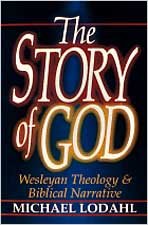
Getting back to theology, though: Eric has linked to this book, which I'd have to say is one of the most striking theology covers I've seen: a veritable feast for the eyes. The designer's website has images of their other book covers, including a stunning poetry series, a gorgeous milk cover, a sexy retro James Bond series, a Peter Carey series designed with tissue-paper, and – my favourite – a sumptuous Jules Verne series. It's not often you see covers like this – covers that are really works of art in their own right. (If I was a theology publisher, I'd be getting on to these guys: if you don't think covers make much of a difference, just look at the previous cover of The Story of God, and you'll know why you never heard of that book till now.)

There's also a nice Book Design Review blog, which features loads of cool book covers (including an annual shortlist of the year's best covers). One of the gems I discovered on that blog is the following book about Kafka – a cover that makes me twitch my antennae and grin from ear to ear:

Of course, for many years the Folio Society has been producing seductively lovely covers: they're so good that my wife and I have occasionally been lured into buying them, even though God knows we can't afford them. (Did we really need that full set of Jane Austen novels? Were the old paperbacks really so demeaning? Who knows, next time I have £175 burning a hole in my pocket I might even get their fabulous Moby-Dick edition.)

Finally, no post about book covers would be complete without mention of the South American publisher, Los Libros de Homero – they have a beautiful website, and their book covers are quite breathtaking. (I know the fellow who founded this publisher, and he's a true bibliophile, not a mere businessman: this makes all the difference.)

Oh, and I'm also very glad that Penguin Australia recently launched a new series of Popular Penguins, with those classy old retro covers. This is what paperbacks are all about. Plus, for the price of a single Folio Society volume, you could fill your entire house with groovy orange Penguins. Think about it.

Anyways, just to prove that not all cover designers are people of intelligence, sensitivity and creative genius, here's one of the worst covers you'll ever see – brace yourself...

Saturday, 11 April 2009

Resurrection: Piero della Francesca

One of the greatest artistic representations of Christ’s resurrection is Piero della Francesca’s Resurrection in Palazzo Communale of Borgo, Sansepolcro in Tuscany:

Rowan Williams’ new collection, Headwaters (Perpetua 2008), includes a poem about this painting, entitled “Resurrection: Borgo San Sepolcro”. Here’s an excerpt:

So the black eyes
fixed half-open, start to search, ravenous,
imperative, they look for pits, for hollows where
their flood can be decanted, look
for rooms ready for commandeering, ready
to be defeated by the push, the green implacable
rising. So he pauses, gathering the strength
in his flat foot, as the perspective buckles under him,
and the dreamers lean dangerously inwards. Contained,
exhausted, hungry, death running off his limbs like drops
from a shower, gathering himself. We wait,
paralysed as if in dreams, for his spring.

Sunday, 4 January 2009

A painting of Karl Barth

Speaking of Oliver Crisp, here’s a photo of the painting he made for me in Princeton. It will soon be hanging proudly on my study wall:

Tuesday, 16 December 2008

Alternative theses on art

Thanks for all the very interesting comments on my theses on art – the discussion gave me lots to think about, and certainly caused me to rethink some of the theses. (I don’t think anyone agreed with my remarks about “didactic” art, which may be a pretty good indication that I’m wrong…)

Anyway, a couple of people have also posted alternative sets of theses, with some fundamental criticisms of my post: Ten Alternative Theses on Art, and Parsing Ten Theological Thesis on Art.

Update: In addition, see Theses on Art and Ten (Theological) Theses on Art.

Saturday, 13 December 2008

Ten theological theses on art

I was talking the other day about art with the delightful and incomparable Oliver Crisp (who went to art school before he studied theology). So here’s my attempt at ten brief theses on art (with a picture below of one of my favourite paintings in New York – Picasso’s 1936 Girl Asleep at a Table):

  1. Art is not a representation of the world or an expression of feeling, but a construction of form
  2. Nature is flawed; art is more perfect than nature
  3. Art is therefore a parable of the redemption of the world
  4. Art is tradition; it opens the future by renewing the past
  5. Art is the occurrence of the new; metaphysics trails in art’s wake
  6. Art may be true or good to the extent that it seeks only the beautiful
  7. Didacticism is therefore the enemy of art. Bad art is not harmless; it is a betrayal of the world, violence against beauty
  8. Beauty in art can take form as grotesqueness, fragmentation and dissonance
  9. The beauty of grotesqueness, fragmentation and dissonance has a special proximity to a Christian theology of the cross
  10. God is beauty; the crucified Christ is the beauty of God

Thursday, 6 November 2008

Bruno Forte: on music and apocalyptic aesthetics

In my posts on popular culture here at F&T (on films, music, or whatever), I’m often looking for ways to talk about aesthetics in terms of disruption and dissonance – “form” as a kind of apocalyptic grotesqueness; “beauty” hidden sub specie crucis. There are some helpful ideas along these lines in a new book by the Italian theologian and archbishop, Bruno Forte: The Portal of Beauty: Towards a Theology of Aesthetics (Eerdmans, 2008). I went along tonight to a public lecture by Forte, and it was quite stunning – the Catholic archbishop presented a kind of “aesthetics of the cross,” with numerous colourful digressions into Luther and Karl Barth. So now I’ve now been devouring his book – here’s what he has to say in the chapter on music:

“Transposing this understanding of the Spirit to the musical event … one can hypothesize a form of music in which interruption, transgression, and silence are no less eloquent than harmony and sound. It is a matter, that is, of arriving at a kind of music that – without excluding tonality a priori, but also without any rigid adherence to it – would be able to find excessive forms which could transmit the message of that openness, newness and freedom proper to the action of the Spirit in God and history…. Such music would certainly not transmit the classical idea of beauty – the presence of the Whole in the fragment – by way of harmony or ordered numerical relationships. Yet it could render the no less pregnant idea of beauty as the Whole irrupting into the fragment and the fragment opening itself to be embraced in the depths of the unsayable Whole; and this by way of interruption, negation, surprise, silence, no less than of harmony, measure, and relationship” (pp. 99-100).

Ah, just thinking about it gives me a hankering for a good dose of Tom Waits:

       “Well you play that tarantella, all the hounds will start to roar
       The boys all go to hell and then the Cubans hit the floor
       They drive along the pipeline, they tango till they’re sore
       They take apart their nightmares and they leave them by the door”

Wednesday, 5 November 2008

Art and theology with Edward Knippers

The series on the paintings of Edward Knippers is now underway over at Theology Forum (including my own post), with plenty of nice pictures to look at. Here are the links so far, with a brief excerpt from each post:

First, Edward Knippers discusses his own work in relation to a theology of incarnation and embodiment: “I hope that my cubist-type language suggests a multi-dimensional world quite different from our own as it keeps the eyes in constant motion through transparent overlappings. I have tried to use this visual metaphor to hint at the movement behind the veil – to uphold the truth that for those in Christ there is glory beyond the edges of our comprehension.”

Next, Fred Sanders discusses the visual language of Knippers’ work: “Up close, a Knippers painting is a revelation: in your space, in your face, confrontational and aggressive. His pinkish giants don’t stay in a polite middle distance in his images, but crowd the foreground. A room with three or four of them in it feels more like a wrestling arena than an art gallery.”

Then I discuss representations of resurrection in Knippers’ paintings: “Above Lazarus stands the figure of Christ, with hands spread out in a gesture of creation, of forming. It is Christ who dissolves the formlessness of death, and brings forth the new form of sheer uncontainable life. The creative presence of Christ fractures and disrupts the world’s material order, bursting it open and reassembling it, wholly interpenetrating it with the flash and flame of God’s own life.”

Then David Buschart discusses physicality in Knippers’ work: “By omitting dress, Knippers deftly brokers the challenge of both universality and particularity, for the absence of dress in his human figures removes an excuse for someone to hold the images at a distance, and yet these are particular people.”

And finally, Edward Knippers responds to the posts.

Thursday, 30 October 2008

Art and incarnation: the art and theology of Edward Knippers

Next week, Theology Forum will be hosting a “blog exhibition” showcasing the art of Edward Knippers. Starting Monday, they’ll be posting several pieces of Knippers’ work each day, accompanied by short essays which engage theologically with these paintings.

My own essay on “Knippers and the Resurrection of the Body” will be posted on Wednesday. I’m very excited to be contributing to this excellent series – so make sure you stop by next week at Theology Forum, and join the discussion about God, paint, and bodies.

Wednesday, 9 May 2007

Conference: the offence of beauty

Jason alerts us to a conference at St Andrews on the offence of beauty: “what can a theological perspective on beauty offer to the arts today?” Speakers include Robert Jenson, Jeremy Begbie and Nicholas Wolterstorff.

Monday, 30 April 2007

Princeton Theological Review

Thanks to the hard work of David and Chris, the new issue of the Princeton Theological Review is now available online. This issue is devoted to theology and the arts – and, as Chris points out, most of the authors are hard-working theology-bloggers.

Wednesday, 24 May 2006

The aesthetic imperative

“It is a feeble view of art that isolates it as a sphere of its own for those who find it amusing. The word and command of God demand art, since it is art that sets us under the word of the new heaven and the new earth. Those who, in principle or out of indolence, want to evade the anticipatory creativity of aesthetics are certainly not good. Finally, in the proper sense, to be unaesthetic is to be immoral and disobedient.”

—Karl Barth, Ethics [lectures from 1928-29], ed. Dietrich Braun (New York: Seabury Press, 1981), p. 510.

Thursday, 16 February 2006

Essential ikons for theologians

Chris Tessone has a great interest in iconography, and I asked him to come up with a list of essential ikons. So here Chris offers his list of the top 10 (primarily Eastern Orthodox) ikons. For a more detailed version of this list, see the full post at Even the Devils Believe.

1. Christ Pantokrator—this stern Christ is a major archetypal ikon. There are many famous Christs Pantokrator, but this small one held by the monks of Mt Athos is one of my favourites.

2. A fascinating contemporary ikon is that of St. John Will-I-Am Coltrane from the website of St. John Coltrane African Orthodox Church in San Francisco.

3. I myself am not fond of highly ornamented ikons. However, among such representations, the Theotokos Nikopoios is one of the most ornamented, with gold and precious stones.

4. The Theotokos Hodegetria, also located on Athos, is a striking representation of the Virgin and the child Jesus.

5. The Tretiakov Gallery in Moscow is a treasure trove of incredible ikons and should not be missed. One of the most famous is the 12th-century Spas Nerukotvornyj, or "Salvation Made Without Hands," originally from the Cathedral of the Assumption inside the Moscow Kremlin.

6. Iconography is not a dead art, so I would be remiss if I didn't offer one or two contemporary ikons in the traditional style: one of my favourite ikons of the Theotokos is this one by Italian iconographer Maria Mirea.

7. This St. Nikolas ikon is an example of contemporary Slovak iconography—it is from the Byzantine Catholic Church of Bratislava.

8. Now for a trio of great Russian ikons. First, Christ the Redeemer of Andrei Rublev: tt is a breathtaking image, which immediately comes to mind when I think of the word "ikon."

9. The Bogomater Vladimirskaja (Mother of God of Vladimir) is certainly one of the greatest ikons held in Russia, and many Bogomater ikons are based on it.

10. Also held in Moscow's Tretiakov Gallery, the Trinity ikon of Andrei Rublev, considered by many to be the greatest Russian ikon in history, or even the greatest work of art in history. I had the great fortune of seeing it up close and personal in the Tretiakov—it is an experience one does not forget.

Wednesday, 1 February 2006

More essential paintings for theologians

Kim Fabricius’ list of Essential Paintings for Theologians was more popular than anything else ever posted at Faith and Theology. His list has been viewed thousands of times, and it generated discussion on many other blogs.

Partly in response to all this discussion, Kim has now added a supplement to his list. So here are ten more essential paintings (and stay tuned soon for a list of Essential Icons as well):

1. Giovanni Cimabue (c.1240-1302): “Crucifix”
2. Fra Angelico (c.1400-55): “Transfiguration”
3. Andrea Mantegna (c.1431-1506): “Dead Christ”
4. El Greco (1541-1614): “Christ's Agony in the Garden”
5. Jan Vermeer (1632-75): “Woman Holding a Balance”
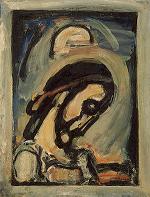
6. Georges Rouault (1871-1958): “Head of Christ”
7. Marc Chagall (1887-1985): “White Crucifixion”
8. Max Ernst (1891-1970): “Virgin Spanking the Christ Child before Three Witnesses”
9. Fritz Eichenberg (1901-1990): “Christ on the Breadline”
10. Roger Wagner (1957- ): “Menorah”

Friday, 13 January 2006

Controversial paintings

Kim’s list of “essential paintings” posted here yesterday is being discussed far and wide around the blogosphere, with responses both of protest and of praise.

Archive

Contact us

Although we're not always able to reply, please feel free to email the authors of this blog.

Faith and Theology © 2008. Template by Dicas Blogger.

TOPO