Showing posts with label publishing. Show all posts

Tuesday, 8 November 2016

To write new books is human; to publish old ones divine

Some wonderful new books were brought into the world this year. I love them and am grateful for their safe arrival. My favourites have included Rowan Williams's brilliant study of tragic theatre, The Tragic Imagination (one of the best books he's ever written, if you ask me); Richard Hays' masterful and memorable Echoes of Scripture in the Gospels; Ian McEwan's delightful novel Nutshell, narrated by Hamlet as a baby in the womb; Stephen Backhouse's biographical page-turner, Kierkegaard: A Single Life; Geoff Thompson's timely theological provocations, Disturbing Much, Disturbing Many; Leo Damrosch's gorgeously illustrated Eternity's Sunrise: The Imaginative World of William Blake; Tom Wainwright's entertaining and sobering Narconomics: How to Run a Drug Cartel; and Sandy Maisel's informative American Political Parties and Elections: A Very Short Introduction (terrific series, by the way).

And what about the books I haven't got to yet but am saving for a rainy day? Larry Hurtado's Destroyer of the Gods: Early Christian Distinctiveness in the Roman World looks especially good; so does Catherine Chin's edited volume Melania: Early Christianity through the Life of One Family and Bruce Gordon's John Calvin’s Institutes of the Christian Religion: A Biography and Fleming Rutledge's The Crucifixion: Understanding the Death of Jesus Christ.

I greet you, all you new-born books! May the world treat you kindly! May God's blessing keep you always, may your wishes all come true! May you stay forever young! May you make your authors rich, or at least not destitute!

But even better than all the new books, the past year has been a season of new editions. These are the books that I have loved the most during the past twelve months, these labours of publishing love, these tributes to the human spirit, these hopeful gestures towards culture and a common good. Here are the new editions that I'm talking about, all published within the last 12 months:

Martin Luther, The Annotated Luther (Fortress Press) – 4 big volumes so far, with 2 more still to come, very handsomely produced with big wide margins and an inviting layout, each text nestled in a wealth of historical information (footnotes, anecdotes, woodcuts and other illustrations from the period, extensive introductions to each work, etc). One would always prefer to be reading Erasmus: but if one has to dip into Luther from time to time, this is the way to do it. Fortress Press are a mighty engine-house when it comes to new English editions: if you haven't got the 17 volumes of their Dietrich Bonhoeffer Works, then I chide you.

Edmund Burke, Reflections on the Revolution in France, and Other Writings (Everyman's Library) – 1200 pages of Burkean sanity in the always-lovely Everyman's Library edition, red cloth, gilded spine, gold ribbon, just like the books they made in France before the revolution. This one's not so good on Burke's major works (only the Reflections is included in full, the rest are excerpted), but it does make room for innumerable little pamphlets and speeches and letters and whatnot, always worth reading for Burke's inimitable prose style.

T. S. Eliot, The Poems of T. S. Eliot (Johns Hopkins University Press) – 2 massive volumes, about 2,000 pages' worth, all that you could ever want (and more) of this most modern of modern poets. And since Eliot was also perhaps the greatest essayist of the 20th century (Virginia Woolf is just as good – but who else is in their league?), how could I be forgiven if I failed to mention the same publisher's multi-volume critical edition of Eliot's Complete Prose?

Reinhold Niebhur, Reinhold Niebuhr: Major Works on Religion and Politics (Library of America) – Well technically this was more than a year ago, it came out in April 2015, but who's counting? For less than 30 bucks you can get your hands on 800 pages of Niebuhr, including four complete books and a whole archive of sermons, lectures, prayers, etc, much of it never published before.

John Maynard Keynes, The Essential Keynes (Penguin) – Did you know how much fun it can be to spend an afternoon reading Keynes? Do yourself a favour and give it a try. This goodly ten-dollar paperback crams in 600 pages of Keynes – not only the economics but also a sample of his immensely insightful and entertaining thoughts on politics, culture, biography, etc. Keynes tends to be remembered only as an economist which is a shame since he was one of the most cultured characters of his day, a member of the Bloomsbury Group and a scintillating essayist with wide interests and boundless curiosity.

And the other day this one arrived, the mother of all new editions, a massive scholarly labour, a playground erected over the crater of the theologians: Friedrich Schleiermacher, Christian Faith: A New Translation and Critical Edition (WJK) – 2 volumes, well over a thousand pages, newly translated by Terrence Tice and Catherine Kelsey, with thousands of footnotes on Schleiermacher's German vocabulary, sources, etc, and with a most marvellous 60-page "analytical index of topics" that provides a key to Schleiermacher's intricate tapestry of concepts. I say this without a trace of irony: I read the whole index right through and found it riveting. I was riveted! It's a wonderful new edition and an exceptional achievement.

So there you have it, reader. By all means read the new books. But by even more means, read the old ones too. For to write new books is human; to publish old ones divine.

Wednesday, 18 December 2013

Two new publications

I feel very proud to have a chapter in Beverly Gaventa's excellent new edited volume, Apocalyptic Paul: Cosmos and Anthropos in Romans 5-8. My chapter is on "A Tale of Two Gardens: Augustine's Narrative Interpretation of Romans 5." Even though I don't really identify anymore with the "apocalyptic" strand of contemporary theology, it was a great pleasure to be involved in this project on the theology of St Paul, and to explore one aspect of the world-shaping influence of Paul's thought.

My new book, Salvation in My Pocket: Fragments of Faith and Theology, has been released too. My daughter has been reading it and she says she really likes it – so there's an early unbiased review for you. Regular readers of this blog will recognise most of the material, though I also added about a dozen new pieces and some other humorous and heart-warming material. Plus, reader, you will find everything very artfully arranged, with each piece interacting – or at least exchanging friendly glances – with its neighbours. The book should be properly stocked soon at Amazon, and it's available now from Book Depository or direct from the publisher.

Speaking of books and such, I recently came across the most sensational two-sentence review of Christ the Stranger over at Goodreads – it's the second review on the page, written by an intelligent, charming, and obviously quite exceptional person named Jenna Smith. Thank you, Jenna, whoever you are! Out of all the reviews I've seen, this was my favourite.

Friday, 12 July 2013

On books written for students: a polemic

In times past there were two kinds of books that scholars could write: books for other scholars and books for the general public. But now a third type of book has insinuated its way into our minds and hearts: books written for students. In the past several years it has become fashionable for authors to write books for students, and for publishers to publish them. It may even have become fashionable – who knows? – for students to read them. 

Just look at the endorsements on the back cover of the latest theology paperback: "an essential book for undergraduate courses" – "a landmark work that will be required reading for graduate courses in the field" – "now all new students will have a sure guide to the terrain!" – and so on.

This is a bad state of affairs – bad for writers, bad for publishers, bad most of all for students and the discipline – and I must raise my voice against it. 

Can you imagine signing up for a university course on Shakespeare, only to discover that you are expected to read summaries, introductions, cleverly worded journal articles – everything, in short, except Shakespeare? Or a course in biology in which the students spend so much time reading introductory literature on microscopes that they never actually get to look into one? It is the same with students who pay good money for the opportunity to study the Christian tradition, and end up squandering their time reading about the views of various theologians without actually getting to encounter a real theologian at close range.

Now introductory survey books are a fine thing. I have read, or started reading, some of them myself. But who are they for? The answer, which ought to be obvious, is that they are for the general public. Anyone interested in Shakespeare can pick up an accessible introduction to his plays: that is why such books are written. But a student who enrolls in a university course on Shakespeare should protest vehemently if they found they were expected to read the same introductory material. The reason you go to university is to study the thing itself – Shakespeare's plays – under the guidance of an expert in the field.

It is the same with theology. It is an excellent thing that an interested member of the public may learn about Christianity simply by reading a good scholarly survey. But if that person subsequently showed up at seminary or divinity school, they would (or should) be scandalised to discover that their teachers wanted them to spend their time reading introductory books. The teacher's job is to help students engage with the tradition for themselves. That's the difference between spending $10 on a paperback and spending $10,000 on an education. It's the difference between reading a book in the comfort of your own armchair and submitting yourself to the rigours of an academic curriculum.

In the discipline of theology, the primary sources are not only scriptural texts but also those texts and lives which have proved generative of subsequent traditions of reflection and debate. Thus Irenaeus and Origen and Augustine are primary sources; Aquinas and Calvin are primary sources; Julian of Norwich and Teresa of Avila are primary sources; the life of St Antony and the life of St Francis are primary sources.

There is a bizarre assumption that primary sources are for the experts while students need the easier, more accessible stuff of secondary literature. But the truth is exactly the reverse. Anybody can read Augustine's Confessions or Julian of Norwich's Revelations – but it takes an expert to appreciate a judicious scholarly survey. That is why publishers struggle to sell copies of their Introductions and Guides, while Augustine and Julian of Norwich have never gone out of print, and never will until the end of the world.

This is not to say that primary sources have to be old books. If you are studying liberation theology, then some of the works of Gutiérrez are primary sources, since these works have generated a tradition of reflection and debate. If you are studying feminist theology then the works of Mary Daly and Rosemary Radford Ruether are primary sources. If you are studying political theology then not only Augustine and Calvin but also Barth and Reinhold Niebuhr might be read as primary sources. But not an introductory survey of liberation theology or feminist theology or political theology.

Does this leave our publishers with nothing to publish? Our aspiring authors with nothing to write about? By no means! Those of us who write should commit ourselves to the two main types of books outlined above: books for other scholars and books for the general public. But please, for the love of God, let us leave our students out of it.

Now I know publishers need to market their books to a wide readership, and I know there is Money to be made from textbooks. But writing for undergraduates is not only bad for the long-term health of the discipline, it's also a mug's game as far as writers are concerned. To write well, it is necessary to have a certain audience in view together with an aspiration to move that audience in some way: perhaps to persuade your scholarly peers to see things differently, perhaps to engage the interest of non-experts, or whatever. If you are aspiring to write for a captive audience – a student readership, required by force to read your book – then the quality of your writing will tend to measure up to the size of your aspiration. That is to say, you will end up writing a boring and tedious book that nobody would ever read without being forced into it. How much better to enlarge our aspirations, to envisage a wider audience of non-captive readers who might just enjoy learning all this stuff – if only we can keep them turning the pages. That, in my opinion, is what publishers ought to be looking for and encouraging in their authors, alongside their primary (and always necessary) commitment to publishing books for the scholarly community.

But as far as publishing books for students is concerned, we ought to be concentrating on finding the best ways of putting the primary sources into their hands. And here is where our publishers could actually be doing a lot more. In fact, at a time when the market seems to be flooded with Guides to This and Introductions to That, there is a surprising scarcity of exactly the kinds of books students really need. There seem to me to be three categories of books required here:

1. First, the anthology. It is only stating the obvious to say that anthologies are one of the most convenient ways of putting primary sources into the hands of students. There are some excellent anthologies around, but not nearly as many as you'd think. Wiley-Blackwell has tended to corner the market, with books like Alister McGrath's Christian Theology Reader, David Ford's Modern Theologians Reader, Samuel Wells' Christian Ethics reader, and Gene Rogers' Theology and Sexuality: Classic and Contemporary Readings. There are some from other publishers, such as Oliver and Joan O'Donovan's political theology sourcebook (Eerdmans) and Bryan Stone's new Reader in Ecclesiology (Ashgate), but they are few and far between. Given the range, diversity, and complexity of the Christian tradition, you'd expect to find a lot more options here, even at the most basic introductory level. And Gene Rogers' Holy Spirit: Classic and Contemporary Readings shows that the anthology doesn't have to be a dull chronological business, but can be a creative and provocative work in its own right, in which traditional texts are framed from the outset by contemporary questions and perspectives.

2. Second, the student edition. It was once common – and, in some humanities disciplines, still is – for publishers to produce special study editions of important works. Typically these include scholarly introductions, bibliographies for further reading, footnotes to help students understand the main text, and perhaps discussion questions at the end. Often headings and sub-headings are also introduced to help reveal the internal structure of the work. The Popular Patristics Series (SVS Press), Classics of Western Spirituality (Paulist Press), and the Works of Saint Augustine (New City Press) are excellent examples of this kind of publishing; and of course Penguin Classics has long published a handful of important Christian texts in this style. (These series are all marketed to the general public, but they are also ideal as student editions.) Another notable example is the Dietrich Bonhoeffer Works series by Fortress Press. But there is really not much else to speak of in theology. In some cases, simply inserting headings and sub-headings into a text would do wonders for the text's teachability. An obvious example: the whole of Barth's Church Dogmatics ought to be published with headings, sub-headings, sub-sub-headings, etc, with a separate table of contents in which students can take in the complex structure of each volume, chapter, and paragraph. (I have an edition of Thomas Aquinas's Summa with a big fold-out table like this, where you can see the whole plan of the work all at once.) To anticipate the objections of purists: there is nothing unseemly about interpolating headings into classic works. We've been doing it for centuries – where do you think Bible chapters come from, or Shakespeare's five acts? It is a tried and true way of helping readers to comprehend, study, and discuss difficult books.

3. Third, the study guide. This is less important than the first two categories, but there is still a legitimate place for separately published guides to primary sources. The aim of such books is to help students to understand a work's background, its internal structure, perhaps its reception, and some of the main scholarly debates surrounding it. There should be a strong component of discussion questions. Most importantly, such books are of use only if they are extremely concise, and if they point students back constantly to the primary source. The danger of such study guides – just think of CliffsNotes and SparkNotes – is that they easily become another substitute for reading the work itself. The longer a study guide becomes, the greater the risk: so keep it short and simple. In the best case such guides can be a valuable stimulus to the students' own engagement with the text, and can help them to stay focused on the big questions raised by the text. This kind of publishing is all but nonexistent in theology, though I've seen a couple of examples recently, both by Wipf & Stock: Jason Byassee's guide to Augustine's Confessions, and Kenneth Oakes' companion to Barth's Romans.

A final word to teachers. When it comes to assigning texts for student reading, every book has an opportunity cost. No matter how wise, wide-ranging, and benevolent the latest Dummy's Guide to Christology might be, a student who spends nine hours reading it could have spent those same nine hours reading Athanasius, Cyril, Rosemary Ruether, or whoever else you believe has a generative importance in the tradition.

But shouldn't we be suspicious of the power dynamics involved in identifying any specific body of texts as authoritative? Yes! I don't mean to suggest that we should all try to agree on a fixed canon of theological texts. But I do think every teacher of the discipline is responsible to decide on a kind of functional canon of primary sources for the purposes of their curriculum. Once you've decided what the primary sources are, you should try to ensure that every course or subject involves a direct encounter with those sources.

It is disempowering if students only ever get to hear other people's views about the tradition, without ever having the opportunity to engage it directly for themselves. If you want to cultivate a highly critical stance towards "canonical" Christian sources, that's fine. But the best way to do it is to help your students to read those sources for themselves. No matter how much critically informed secondary literature your students might read, you'll still be giving them mediated access to the tradition instead of helping them to engage it head-on for themselves. An education in which everything is mediated through expert opinion is ultimately disempowering, and only reinstates the authority of the expert without cultivating genuine intellectual freedom or independence.

Wednesday, 19 December 2012

Best books of 2012

I didn't read so many new books this year. To be honest I've been content to fritter away most of my time reading Augustine and Shakespeare, Shakespeare and Augustine. So the best book I read this year I guess was Antony and Cleopatra, maybe The Tempest. But there were some terrific new books published in the past year, including some experimental works that altered the usual forms of scholarly writing. Here's my selection of the best of the year:

Theology
Marilynne Robinson, When I Was a Child I Read Books (Farrar, Straus and Giroux). If you only want to read one religious book this year, read this one.

Paula Fredriksen, Sin: The Early History of an Idea (Princeton) 

Robin Jensen, Baptismal Imagery in Early Christianity (Baker)

Medi Ann Volpe, Rethinking Christian Identity: Doctrine and Discipleship (Wiley-Blackwell)

Prayer and spirituality
Anne Lamott, Help, Thanks, Wow: The Three Essential Prayers (Riverhead). If you don't want to read even one religious book this year, read this one.
Poetry
Louise Glück, Poems 1962-2012 (Farrar, Straus and Giroux)

Mary Oliver, A Thousand Mornings (Penguin)
Literary criticism
Maureen McLane, My Poets (Farrar, Straus and Giroux). Actually this book defies genre: it's a unique concoction of literary-critical memoir-poetical writing. Very good it is too. Perhaps my favourite new book overall this year.
Essays
Ali Smith, Artful (Penguin). Or maybe this one's my favourite: another genre-bending book, a wondrous quartet of fictionalised essays. This easily wins for cover of the year too (pictured above).
Memoir
Joan Didion, Blue Nights (Vintage)
Novel
Hilary Mantel, Bring Up the Bodies (Henry Holt). All right, it's a big book and I've barely even started. But I know a good book when I see it. Though as a rule I prefer small books to big ones.
Short stories
Alice Munro, Dear Life: Stories (Knopf). These small stories, for instance.
Sermons
Diaries

Monday, 17 December 2012

Theological publishing: the best of 2012

I'll soon post my favourite books of 2012. But first, I'd like to nominate the three most important events in current English-language theological publishing. Each of these is a major series that's been running for some time now, with more volumes appearing this year:

New City Press: The Works of Saint Augustine. Not only the most comprehensive English edition, but the most comprehensive edition of Augustine's works ever published in any language. Highlights include Edmund Hill's translation of De Trinitate, Maria Boulding's wonderful Confessions, and the epic six-volume Expositions of the Psalms – an unparalleled Herculean achievement of early biblical commentary.

St Vladimir's Seminary Press: Popular Patristics Series. Over forty volumes are available in this wonderful series of new translations. The volumes are attractive, affordable, very accessible, nearly pocket-size. They're an ideal resource for classes, book groups, or devotional reading. Highlights include Basil the Great on social justice, Gregory the Great's pastoral rule, poetic exegesis of scripture from the Syriac tradition, Symeon the New Theologian's poems on divine eros, and the collected early treatises on the Lord's Prayer.

Fortress Press: Dietrich Bonhoeffer Works. The new English translation of the complete 16-volume critical edition of Bonhoeffer's writings. A major feat of contemporary scholarship, and a massive resource for protestant theology. Highlights include the critical edition of Ethics, the huge volume of comprehensive prison writingsTheological Education Underground from the illegal Finkenwalde seminary, and that great work of protestant monasticism (and one of my favourite classroom texts), Life Together.

Note: Speaking of patristic texts, there's a new blog community for reading the church fathers, a few pages each day.

Saturday, 10 April 2010

Karl Barth's Church Dogmatics for $99

Readers of this blog will be familiar with recent publishing developments around Barth's Church Dogmatics. I've already discussed the new 31-volume edition and the Logos digitisation, and I've also mentioned the astonishing and indispensable Digital Karl Barth Library. (Incidentally, I'm very pleased that my own institution has now activated a subscription to this database – current students can access it here.)

Anyway, it's very exciting to note another new development: T&T Clark have sold the publishing rights of the old 14-volume edition to Hendrickson. So Hendrickson will now be producing an affordable hardcover reprint of the Church Dogmatics: it's due for release in November, and it's currently selling for $99 through Christianbook.com. There's also a blog entry which answers various questions about this reprint.

So for all those of you who've felt dismayed and rebuffed by the high prices of the existing editions, this is a fantastic opportunity. Kudos to T&T Clark and Hendrickson for making this great work available to a much wider audience!

(Incidentally, if you've never understood why you should read Karl Barth, I refer you to the picture above: the man is on a postage stamp for heaven's sake! Read him!)

Monday, 21 December 2009

Best theology books of 2009

Over the next week I’ll post some roundups of the year’s highlights. Here’s my selection of the best (mainly theological) books of 2009:

Wednesday, 9 September 2009

On weird publishing mistakes

Speaking of books and publishing, I’m always pleased when I come across some weird and unaccountable publishing mishap in one of my books, some defect that sets it apart from the common herd. A notable example is the well-known Hauerwas and Willimon book, Resident Aliens (Abingdon 1989). My copy has the following pagination: 1-32, then 65-96, then 33-64, then 97-175. I have no idea how many copies were printed like this: perhaps I’ve got a Very Rare and Lucky Copy? Or perhaps a whole print-run came out like this?

In any case, pagination like this really adds to the element of surprise: you never quite know what’s coming next. And it’s perhaps a mark of the book’s tightly focused argument that it still reads pretty coherently when you cross that boundary from p. 32 to p. 65. If you lost concentration for a moment while reading, you might not even notice. The text reads: “What we call ‘freedom’ becomes the tyranny of our own desires. We are kept detached, strangers to one another as we go about fulfilling our needs and asserting our rights. The [page break] me. I must be true to myself. The more we can be free of parents, children, spouses, duties, the more free we will be to ‘be ourselves’…”

Monday, 7 September 2009

On beautiful book covers

They say you can't judge a book by its cover. By I think that's a very overrated sentiment. When I'm choosing a novel, for example, I always base my choice on two things: the cover, and the first page. In the publishing industry, a lot of care goes into producing covers that will attract the right kind of reader; that's why most crime thrillers, or historical fictions, or literary fictions, look recognisably similar. The cover design has its own genre. (The same is true with films. In the first instance, I always base my choice on the DVD cover.)

When it comes to covers, books published in other languages are of course a different story – that obstinately democratic white cardboard of the French, or the austere and humourless cloth of the Germans – but at the moment I'm talking only about English-language publishers.

Generally speaking, theology book covers tend to be nice and tasteful, if a little predictable. The diversity is certainly less pronounced than in philosophy. In the latter discipline, you have everything from the most spare, elegant simplicity (e.g. Kierkegaard's writings) to the most outrageously loud graffiti-art (e.g. the Continuum series). A while back, Evan pointed out a nice gallery of the various international editions of Harry Frankfurt's book, On Bullshit. It's an extremely fascinating series of images, depicting very different styles of cover design.

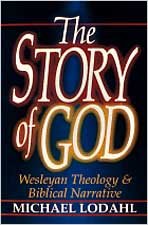
Getting back to theology, though: Eric has linked to this book, which I'd have to say is one of the most striking theology covers I've seen: a veritable feast for the eyes. The designer's website has images of their other book covers, including a stunning poetry series, a gorgeous milk cover, a sexy retro James Bond series, a Peter Carey series designed with tissue-paper, and – my favourite – a sumptuous Jules Verne series. It's not often you see covers like this – covers that are really works of art in their own right. (If I was a theology publisher, I'd be getting on to these guys: if you don't think covers make much of a difference, just look at the previous cover of The Story of God, and you'll know why you never heard of that book till now.)

There's also a nice Book Design Review blog, which features loads of cool book covers (including an annual shortlist of the year's best covers). One of the gems I discovered on that blog is the following book about Kafka – a cover that makes me twitch my antennae and grin from ear to ear:

Of course, for many years the Folio Society has been producing seductively lovely covers: they're so good that my wife and I have occasionally been lured into buying them, even though God knows we can't afford them. (Did we really need that full set of Jane Austen novels? Were the old paperbacks really so demeaning? Who knows, next time I have £175 burning a hole in my pocket I might even get their fabulous Moby-Dick edition.)

Finally, no post about book covers would be complete without mention of the South American publisher, Los Libros de Homero – they have a beautiful website, and their book covers are quite breathtaking. (I know the fellow who founded this publisher, and he's a true bibliophile, not a mere businessman: this makes all the difference.)

Oh, and I'm also very glad that Penguin Australia recently launched a new series of Popular Penguins, with those classy old retro covers. This is what paperbacks are all about. Plus, for the price of a single Folio Society volume, you could fill your entire house with groovy orange Penguins. Think about it.

Anyways, just to prove that not all cover designers are people of intelligence, sensitivity and creative genius, here's one of the worst covers you'll ever see – brace yourself...

Wednesday, 20 May 2009

Comparing the new Barth edition: print or digital?

Now that the new edition of Church Dogmatics is out, some folks have asked me to compare the print edition with the Logos digital edition (I’ve posted on both the print edition and the Logos edition – if you’re interested in the Logos edition, for a limited time you can also get a 25% discount via the F&T discount page).

Although I’m not normally a technophobe, I must admit I have generally resisted the use of digitised books (except in the case of journals, which I only ever read online). I suppose I’m too addicted to the sheer exquisite materiality of books –

a coil of slyly shifting scents,
a finger’s papery caress,
the rasping breathless flutter of the page,
sinking down deep in that delicious inkiness,
all smooth and slow and seeping.
Now spent and finished, but still there,
(this is no one night stand,
no quick embrace erased before the dawn,
no scribbled thank you on a pillow note)
occupying space, etched indelibly on your beechwood world,
a solid smiling thing, waiting dustily to outlive you,
to be at last discarded, lost, forgotten,
found again.

Sorry, I’m getting quite carried away... In any case, the new print edition of the CD is lovely. So it has come as a surprise to me to discover that I’ve actually started to prefer the Logos edition – at least for research and writing. It all started when they kindly sent me their new Mac engine: now, you can use Logos with a nice Mac aesthetic and functionality. So I’ve been using Barth’s CD in Logos for all my recent writing, and it has already started to feel indispensable.

Here are some of the reasons why it’s so good for research: unlike the new print edition, the Logos edition also displays the German pagination; when I hover over one of Barth’s many biblical references, there’s a pop-up of the relevant passage; when Barth cites a text like Calvin’s Institutes, his reference links directly to the passage in Calvin; when I double click on any word, Logos brings up a relevant text on that word (e.g. if I double-click the word “nominalism” in Barth’s text, it immediately brings up the extended Encyclopedia of Christianity entry on nominalism; or if I double-click a Greek word, it brings up the relevant TDNT entry); and when I cut and paste a passage into a Word doc, it automatically generates a footnote with the reference. These features are so nice, so intuitive, so useful that I already wonder how I ever managed without it. (The search capacity in the Logos edition is also very good, although it can’t really compete with the monumental search capacities of the big online Barth database: if your library can afford a subscription, this database is the Barth research tool par excellence.)

I love books. I’m still addicted to the physicality of the book, and committed to its ontological status as a non-virtual object. When I’m simply reading Barth for pleasure, I would always prefer to sit in a chair with a text that occupies physical space, an object that I can bend and smell and handle and scribble in; a vulnerable object, so easily damaged by rain or wine or coffee, yet strangely resilient nonetheless. But for research, I’ve really grown to love – and to depend on – the Logos edition.

And since I’ve been waxing eloquent about books, I’ll leave you with my favourite bibliophile photograph: a photo taken in 1940 of the bombed library at Holland House in Kensington, London. This is what libraries are all about (click the image to enlarge).

Wednesday, 6 May 2009

Karl Barth's Church Dogmatics: the new 31-volume edition

I was delighted to find that the new edition of Barth’s Church Dogmatics arrived at our college library today. T&T Clark have done a splendid job on this new edition – the production quality really exceeded my expectations. The 31 volumes come in two handsome burgundy slipcases; the covers are bright and eye-catching but still sober and tasteful; the typeset is crisp and attractive; the original pagination is included in the margins; and I was especially pleased to see that the printers (at a time when the use of cheap paper is becoming all but ubiquitous) have used a very nice high-grade paper.

Kudos to T&T Clark for this very fine new edition! If you missed my review of the digitised Logos edition, you can also read it here. The print edition is available from Amazon, or (massively discounted) from Christianbook.com. So don’t just sit there: go and ask your librarian (or your spouse) to order a set! 


Thursday, 3 April 2008

Karl Barth's Church Dogmatics: the new edition

The most eagerly anticipated event of theological publishing is finally upon us: the release of the new edition of Karl Barth’s Church Dogmatics! The print edition should be available from T&T Clark by September – but the digital edition, published by Logos, will be released later this month.

Logos have kindly sent me an advance review copy of this digital edition, and I’ll be posting a full review shortly. In the mean time, however, you might want to consider ordering this at the special pre-publication price – until 14 April, you can get the digital edition for $499 (after 14 April, the digital edition will go for $699; and T&T Clark are predicting that their print edition will retail for $840).

In the digital edition, you can also do things like annotate Barth’s text and jump directly to the works which Barth cites (since it integrates with any other Libronix resources, e.g. the Scholar’s Gold library).

You can learn more about this edition here, or you can place an order here. It’s a very exciting new resource – stay tuned for a full review soon!

Wednesday, 2 April 2008

A plea for reprints

Some of the best and most important theological books are books that you’ll never own – either because they’ve gone out of print, or because they’ve never been available in an affordable edition. So here’s my heartfelt plea to our community of theological publishers: please give us more reprints! Here’s my own wishlist of six theological books which urgently need reprinting:

  • Eberhard Jüngel, God as the Mystery of the World (Eerdmans) – undoubtedly one of the most important and ambitious dogmatic works since Barth’s CD, but it has never been issued as a paperback, and the few available hardcover copies are prohibitively expensive
  • David F. Ford, Barth and God’s Story (Peter Lang) – in my opinion, this is one of the best books ever written on Barth’s theology (and, more generally, one of the best books on narrative theology); but it has long been out of print, and it’s virtually impossible to find even a used copy
  • Adolf von Harnack, Marcion: The Gospel of the Alien God (Labyrinth Press) – although this is a fundamental work in the history of modern theology, it is almost impossible to get a copy (there is one copy for sale here, if you can afford it!)
  • Robert Jenson, Story and Promise: A Brief Theology of the Gospel about Jesus (Fortress) – a unique, vivid and delightful sketch of Christian theology; I still regularly recommend this to people, even though it’s now difficult to obtain
  • Hans Frei, The Doctrine of Revelation in the Thought of Karl Barth, 1909–1922: The Nature of Barth’s Break with Liberalism (unpublished) – Frei’s 1956 doctoral dissertation has never been published, but it’s a crucial text for the development of Yale-school narrative theology, and I’m sure it would sell like hotcakes if someone printed it.
  • John Milbank, The Religious Dimension in The Thought of Giambattista Vico (1668-1744) (2 vols.; Edwin Mellen) – I’m reading this at the moment; it’s a brilliant historical study, and an important work for understanding the later development of Milbank’s thought. Someone ought to publish this as an affordable, single-volume paperback.

Archive

Contact us

Although we're not always able to reply, please feel free to email the authors of this blog.

Faith and Theology © 2008. Template by Dicas Blogger.

TOPO