Monday, 31 July 2006

Three things I believe

This isn’t meant to be a comprehensive list—but here are three things I believe:

1. I believe that Jesus Christ is God’s self-giving Word.
2. I believe that this Word is a wholly good Word for all people.
3. I believe that this good Word is the meaning of life.

Bultmann anniversary

Yesterday, 30 July, was the anniversary of the death of Rudolf Bultmann. To mark the occasion, Jim West offers a list of Bultmann’s best books, as well as a series of posts about little-known aspects of Bultmann’s life and work. Did you know, for instance:

I like Bultmann better than almost all other modern theologians; his face peers at me from the wall, right next to the face of his friend and nemesis, Karl Barth:

Sunday, 30 July 2006

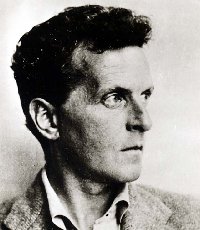
For the love of God (26): Why I love Wittgenstein

A guest-post by Sam Norton

“If what we do now makes no difference in the end, then all the seriousness of life is done away with”—a remark which Ludwig Wittgenstein made to his friend Drury, skewering the universalist heresy.

Wittgenstein was a deeply serious man, and I believe he developed insights which all theologians need to absorb. While it is debatable whether he was in fact a Christian, he certainly believed in God, and he infamously saw things “from a religious point of view.” While at service on the Eastern Front in World War I, he was known as “the man with the gospels,” as he never went anywhere without taking Tolstoy’s summary with him.

He was a rather tortured soul in terms of his sexuality; he revered Augustine (the greatest influence on his own thought—he felt the Confessions to be “the most serious book ever written”); he hated virtually all modern music (you could “hear the machinery in Mahler”); and he gave up all his wealth to his sisters, since he felt that they were the only people unlikely to be spoiled by it. Clearly, in a different era, he would have been a monk, possibly a hermit. I find him a compelling human being: complex, flawed, yet gripped by the claim of the divine upon his life.

What is most important about Wittgenstein is his method of philosophy, which prevents a fruitless pursuit of metaphysical “solutions”; more precisely, it teaches us what metaphysics actually is. Thus Wittgenstein’s method is a necessary discipline for theologians, as it prevents us from mis-characterising the nature of Christian doctrine. As he put it himself: “Christianity is not a doctrine, not, I mean, a theory about what has happened and will happen to the human soul, but a description of something that actually takes place in human life. For ‘consciousness of sin’ is a real event and so are despair and salvation through faith. Those who speak of such things (Bunyan for instance) are simply describing what has happened to them, whatever gloss anyone may want to put on it.” Wittgenstein has had a great influence on contemporary theology, from Stanley Hauerwas to Herbert McCabe—and it seems to me to be a wholly beneficial influence.

While most understandings of Wittgenstein emphasise the “Sturm und Drang” of his life, I think there is also an under-appreciated current of joy. He used to relax by going to the cinema, especially enjoying Westerns—and he found this to be of value. He wrote early in 1947, “I have often learnt a lesson from a silly American film”—and I believe that he watched something that year which gave him some inner peace, that allowed him to believe that his life was worth something after all. After all, his last words were: “tell them I’ve had a wonderful life.” I like to think it was what he had in mind.

Saturday, 29 July 2006

Sound like anyone you know?

John Updike’s wonderful novel, In the Beauty of the Lilies (1996), includes a character named Matthew, who belongs to a bizarre Adventist apocalyptic sect. Have you ever met someone who fits this description:

“Matthew ... had his relentless, humourless powers of persuasion but could only talk to other Adventists; when he got among people reared on other premises, with no expectation of a Prophet and of the world’s soon ending, he was lost, dumbfounded by the vastness of such skepticism” (p. 415).

The worst liturgical invention: results

Well, after 715 votes, it’s official: the worst liturgical invention of recent times is the use of tiny cups of eucharistic grape juice (31%). This was followed by liturgical dance (28%), PowerPoint sermons (25%), altar calls (14%, including my own vote), and finally banners on the walls (2%).

Thanks especially for all the entertaining and informative comments—and, believe it or not, there are even more comments about this over at Father Jake Stops the World.

Friday, 28 July 2006

Kurt Anders Richardson: Reading Karl Barth

Many thanks to Baker Academic for sending me a review copy of Kurt Anders Richardson’s recent book, Reading Karl Barth: New Directions for North American Theology.

In this book, Richardson brings Barth’s theology into dialogue with various aspects of contemporary theology, and he seeks to take up Barth’s thought as an instrument of theological and ecclesial reform. Although it is an uneven book, and although it is not structured as clearly as it might have been, Richardson has a fine instinct for interpreting Barth, and he understands clearly what is involved in reading the Church Dogmatics: “To read the CD is more than a literary act or even a philosophical one; it is a religious act because Barth’s work is so fundamentally shaped by his testimony to the Word of God” (p. 12). To read Barth correctly, then, we must read him as a “witness”—and this will always mean to read him in relation to our own theological questions, “to read him and then to move on” (p. 23).

At the heart of Richardson’s own reading of Barth is the conviction that we should begin at the end of the CD, reading the whole work “back to front.” The little fragment on baptism (CD IV/4) thus becomes a “lens” for interpreting Barth’s theology. Although this exciting approach is announced at the beginning of the book, Richardson only develops such a reading in detail in Chapter 6. This is by far the best and richest part of the book—and it’s worth the admission fee for this chapter alone (pp. 161-208).

Here, following Eberhard Jüngel, Richardson explores the (anti-) sacramental theology of CD IV/4 as the hermeneutical key to the whole of Barth’s dogmatics. The triadic structure which Barth develops in IV/4—Deus extra nos, Deus pro nobis, Deus in nobis: “God outside us, God for us, God in us”—is taken up as the underlying logic of the entire CD, and as the most refined expression of Barth’s doctrine of election.

No one has written more acutely and extensively on Barth’s doctrine of baptism than Eberhard Jüngel. And in a lengthy engagement with Jüngel (pp. 176-208), Richardson defends Jüngel’s interpretation of Barth and sharply critiques George Hunsinger and John Webster for muting or dismissing this radical, reforming doctrine of baptism.

Just as Jüngel makes IV/4 the true test of Barth-reception—“whoever wishes to baptise infants should not proclaim his closeness to Barth’s doctrine of predestination!”—so too Richardson critiques all readings of the CD that privilege the sacramental language which Barth was still using in I/1.

Only with the development of his doctrine of election (II/2) did Barth wholly overcome the notion that human action can in any way be “analogous to divine action” (p. 193). Here, Barth’s “analogy of faith” (analogia fidei) achieves its full depth and systematic expression. And it is finally in the doctrine of baptism (IV/4) that “the trajectory of the entire CD achieves a striking degree of clarity” through its expression of the central themes of “correspondence, election, and the distinction between divine and human action” (p. 206).

Archive

Contact us

Although we're not always able to reply, please feel free to email the authors of this blog.

Faith and Theology © 2008. Template by Dicas Blogger.

TOPO