Monday, 14 November 2005

Reformation commentary series

Those who are familiar with IVP’s Ancient Christian Commentary Series might be interested to know that IVP has now announced a new 27-volume series entitled Reformation Commentary on Scripture, to begin releasing in 2009. The general editor will be Timothy George, and the series will include never-before-translated works by prominent figures from the Protestant Reformation.

Sunday, 13 November 2005

Five things

Brandon Wason tagged me with this “five things” quiz. I won’t do all of them, but here are a couple of my “five things”:

Five tasty things
1. Italian food, especially pasta served with a nice Italian red wine
2. Very rich chocolate mud cake
3. Very good espresso (my favourite is from Campos in Sydney)
4. Very cold Guinness
5. Another slice of mud cake (with another espresso)


Five things I would do with a lot of money
1. Buy myself a full set of the TRE, and then a set of RGG
2. Buy a holiday chateau beside a lake in Switzerland
3. Take a three- or four-year holiday in my Swiss chateau
4. Buy Sean du Toit his own set of Kittel’s TDNT, so that he doesn’t have to drive so often to the library
5. Buy a new car—since mine was in a crash this morning (no injuries!)

How (not) to write book reviews

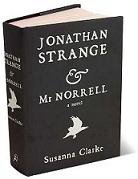
One of the most delightful recent novels is Susanna Clarke’s Jonathan Strange and Mr Norrell (London: Bloomsbury, 2004)—an extraordinarily gripping, clever and humorous book, and perhaps one the finest of all fantasy novels.

In one scene that many scholars will find all too familiar (pp. 112-13), Mr Lascelles advises the magician Mr Norrell to publicise his opinions about magic by writing book reviews for the Edinburgh Review.

But Mr Norrell objects: “I really have no desire to write reviews of other people’s books.... [I]t is my own opinions which I wish to make better known, not other people’s.”

“Ah, but, sir,” said Lascelles, “it is precisely by passing judgements upon other people’s work and pointing out their errors that readers can be made to understand your own opinions better. It is the easiest thing in the world to turn a review to one’s own ends. One only need mention the book once or twice and for the rest of the article one may develop one’s theme just as one chooses. It is, I assure you, what every body else does.”

Saturday, 12 November 2005

How to read Karl Barth

“[R]eading Barth nearly always involves us in reading against our expectations of what Christian theology ought to be like.... Part of what makes Barth so demanding of his readers is the requirement that they keep alive their capacity for astonishment, for that overwhelmed sense that the gospel takes us to some very surprising places and leads us to think and say very surprising things. Good readers of Barth are usually those who have not fallen into reading ruts.... Bad readers, by contrast, are those who know what to expect.”

—John B. Webster, Barth’s Moral Theology: Human Action in Barth’s Thought (Grand Rapids: Eerdmans, 1998), p. 81.

The cross and the Trinity

“Anyone who really talks of the Trinity talks of the cross of Jesus, and does not speculate in heavenly riddles.”

—Jürgen Moltmann, The Crucified God (London: SCM, 1974), p. 207.

Friday, 11 November 2005

The prayer of all doctoral students

Oh, if there's an original thought out there,
I could use it right now.

—Bob Dylan, “Brownsville Girl” (1986).

Archive

Contact us

Although we're not always able to reply, please feel free to email the authors of this blog.

Faith and Theology © 2008. Template by Dicas Blogger.

TOPO